How Many GSM Do Custom Leggings Need? A Factory Guide
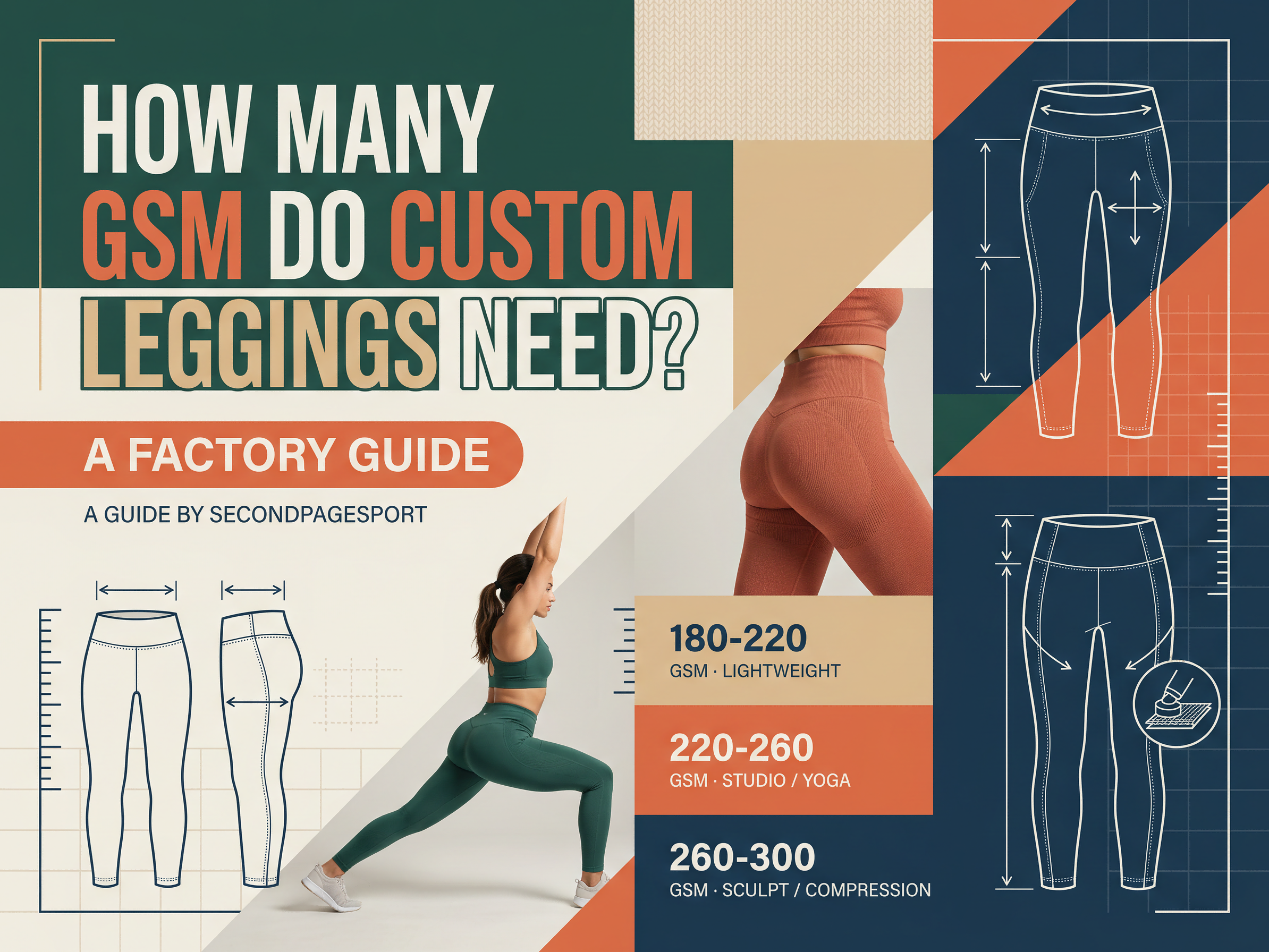
Most custom leggings use fabric between 200 and 300 GSM. Yoga and studio styles typically sit at 220–260 GSM, compression and sculpting styles at 260–300 GSM, and lightweight fashion or hot-climate styles at 180–220 GSM. But GSM alone does not decide whether a legging works: knit construction, elastane percentage, colour and pattern fit change how the same weight behaves on the body, so the final figure is confirmed per style and fabric.
If you are sourcing for a spring 2027 drop and a supplier quotes one GSM number "for all leggings", that is a warning sign. As a low MOQ activewear manufacturer China supplier working with startup brands, we see the same dispute weekly: the weight was never written as a checkable term. This guide explains the ranges and, the part most fabric guides skip, how to write GSM into your tech pack as a contract clause.
What GSM means in fabric
GSM — grams per square metre — is the mass of one square metre of fabric. ISO 3801:1977 is the reference standard for fabric mass per unit area; written for woven cloth, it shares the g/m² metric that knit fabrics are measured with under equivalent industry methods. A higher GSM means a denser fabric, not a better one: a well-built 220 GSM interlock can outperform a loose 280 GSM fabric on opacity and recovery.
GSM ranges by legging type
Ranges below are compiled from published industry fabric guides (accessed November 2026); they overlap because categories overlap. Treat them as a starting filter, then confirm per style.
| Use case | Typical GSM | Trade-offs |
| Lounge, fashion tights, hot-climate styles | 180–220 | Cool and light; low compression, opacity must be tested in every colour |
| Yoga, Pilates, studio training | 220–260 | The commercial sweet spot: coverage with flexibility |
| Sculpting, gym, squat-focused training | 260–300 | Firm hold and warmth; less breathable, higher fabric cost |
| Winter tights, fleece-backed, shaping | 300+ | Maximum opacity and warmth; can feel heavy in heated studios |
For most first collections we quote a 230–250 GSM nylon-spandex as the baseline, but the right weight depends on market: Australian buyers ordering for summer want the lower band; Northern European autumn programmes push the upper band.
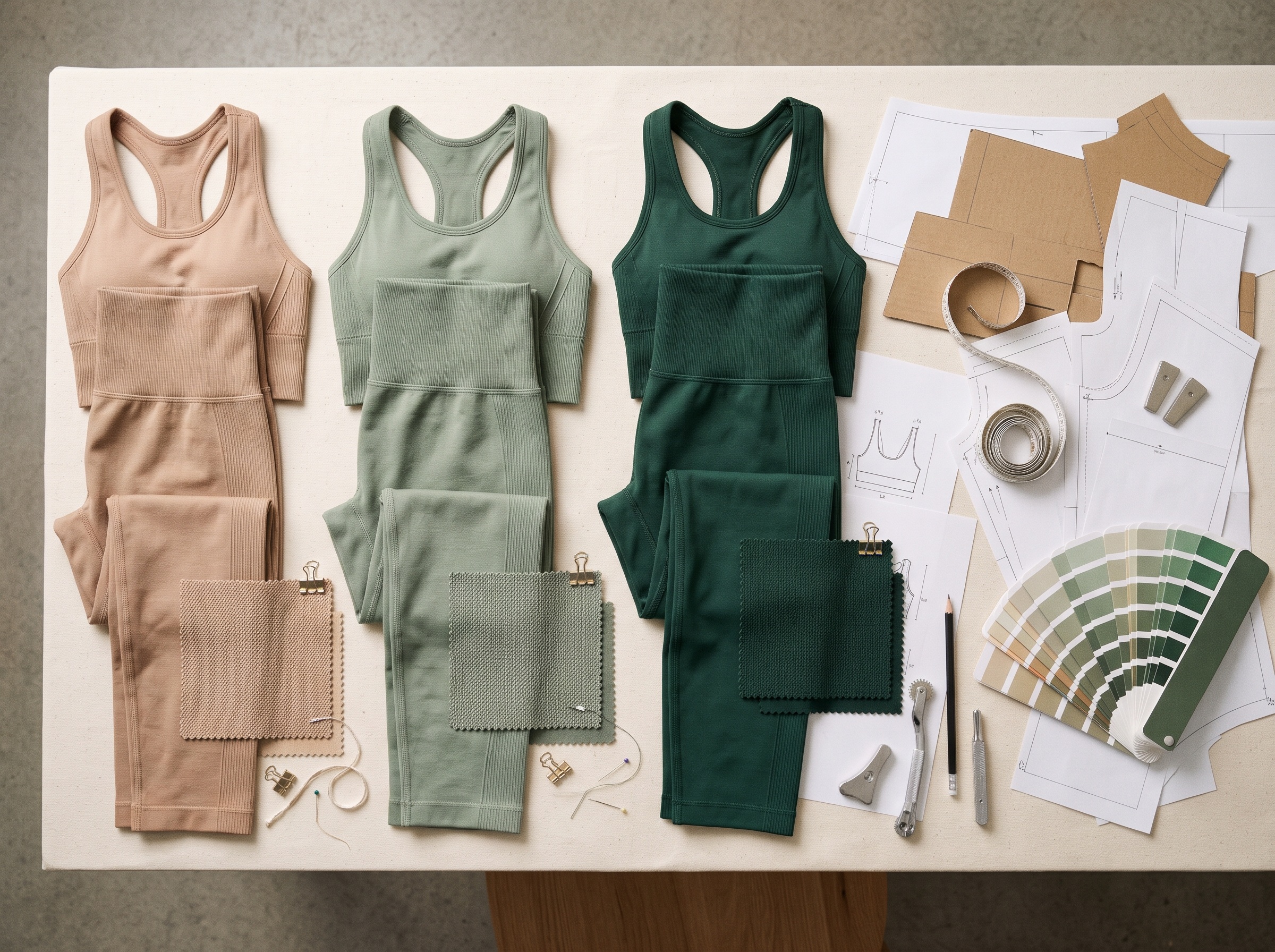
When a legging ships as part of a set, weight matching matters as much as colour matching. Our custom yoga sets manufacturer page shows how tops and bottoms pair per collection — and why both pieces' GSM is confirmed in the same spec sheet.
Why GSM alone does not decide performance
Four variables interact with weight, and a spec sheet that only states GSM is incomplete:
1. Knit construction. Interlock and double-knit structures place yarns face-to-face, so gaps stay closed under stretch; the same GSM in a loose single jersey opens visibly.
2. Elastane content. A 78/22 nylon-spandex and a 90/10 blend behave differently at identical weight; coverage depends on density, not the percentage alone.
3. Colour. Black is forgiving; latte, white and light grey are not. The same fabric can pass a stretch test in black and read sheer in a pale shade, so test the lightest colour in your range first.
4. Pattern fit. A seat cut too tight stretches fabric beyond its tested range; fabric and pattern must be reviewed together, or a good fabric still fails.
How to write GSM into your tech pack
Turn the number from a description into a checkable term:
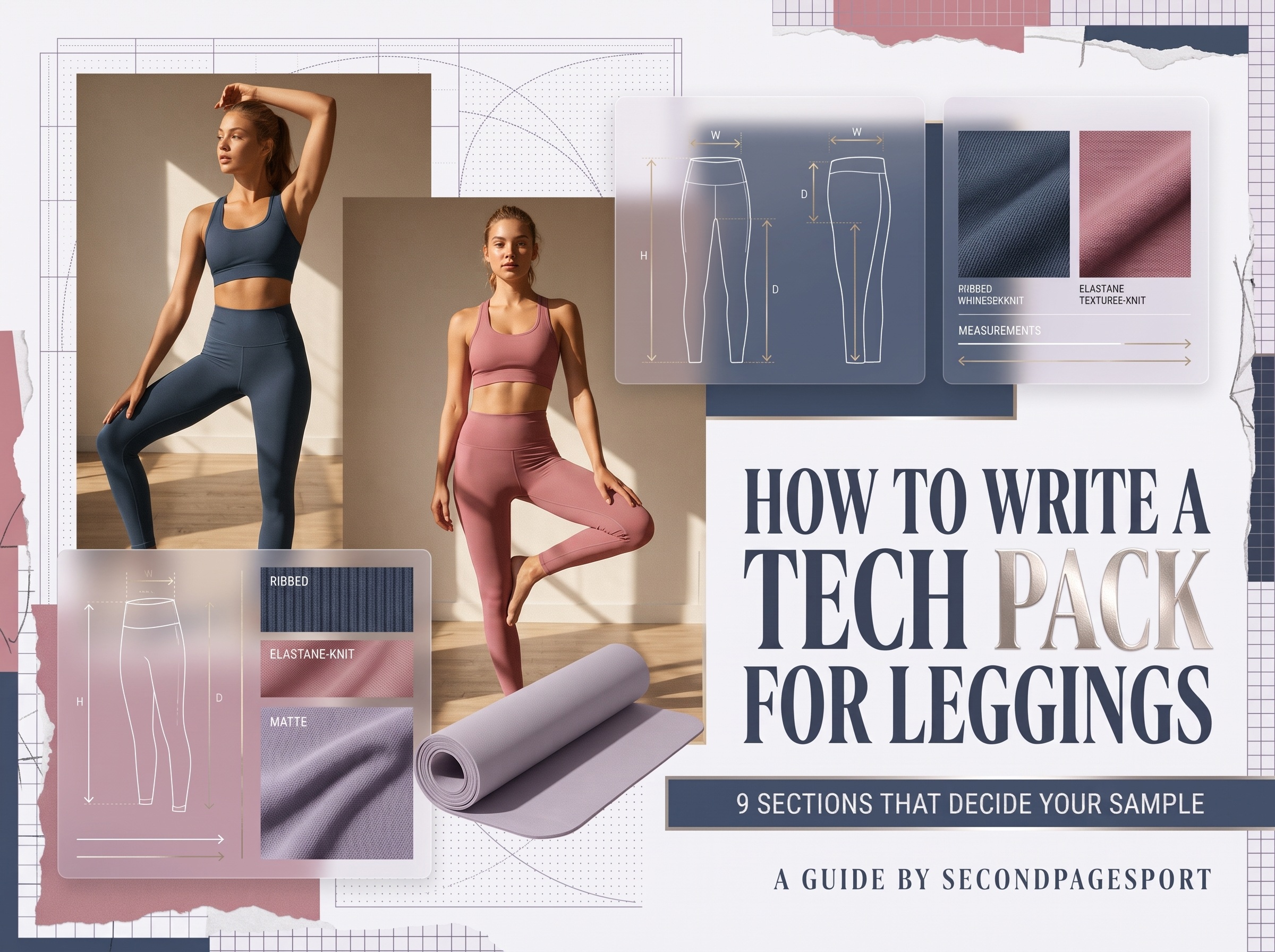
- State the target GSM and tolerance. A ±5% band is common trade practice; "250 GSM ±5%" gives both sides a measurable acceptance line.
- Name the composition and knit ("78% nylon / 22% spandex interlock"), not just the weight.
- Require opacity testing in the lightest colour, not only black.
- Ask for the measured GSM on the counter sample, not the mill's datasheet value, then re-check it on the pre-production sample.
These four lines cost nothing to add and remove most fabric disputes before bulk production starts.
How to verify a supplier's GSM number
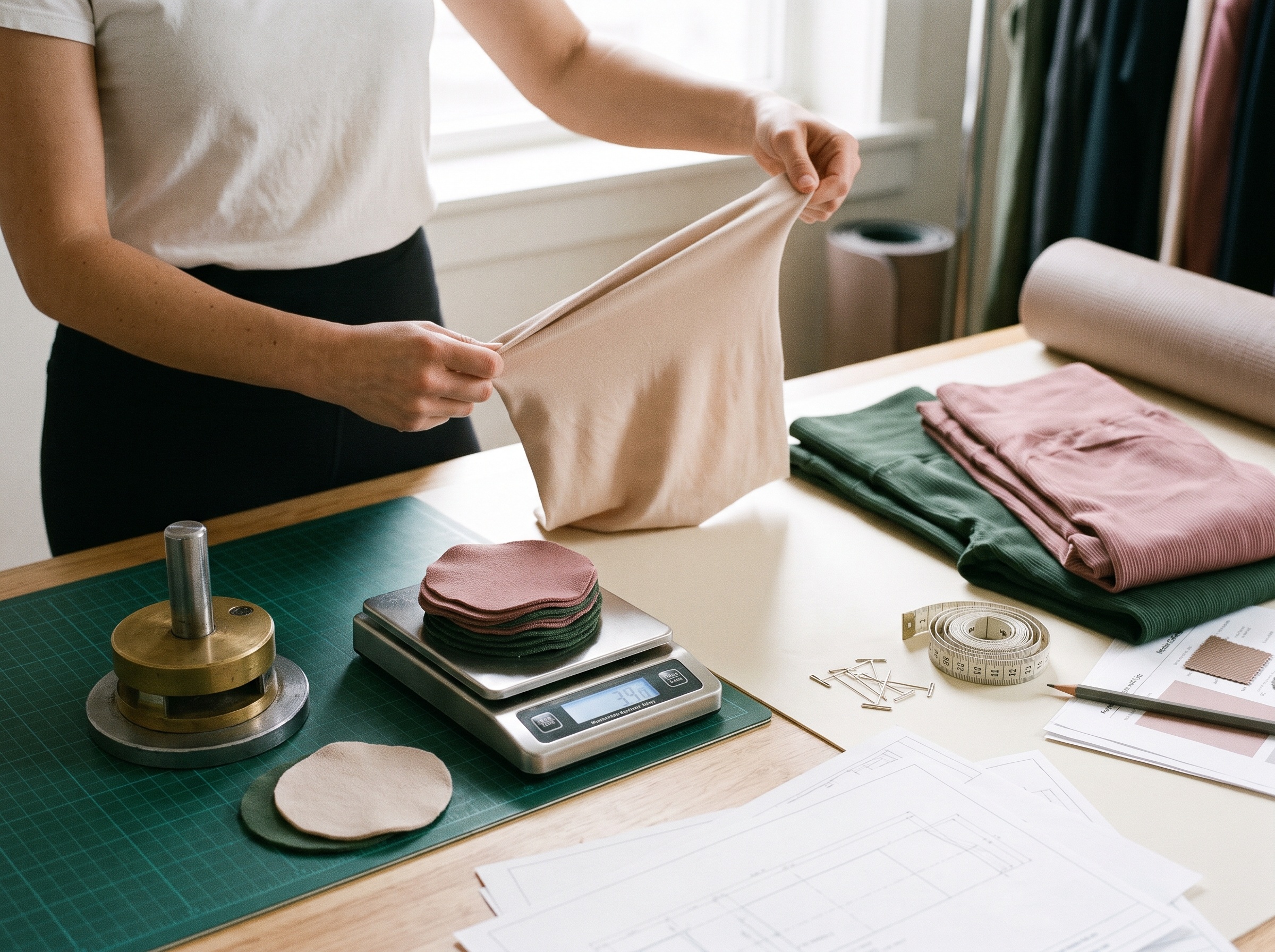
No lab equipment is needed for a first check. Cut a 100 cm² swatch, weigh it in grams, multiply by 100 — that is the GSM. Weigh three swatches from different roll positions and average them, then stretch one under bright light in your palest colourway. If your figure differs from the quoted one by more than the spec tolerance, raise it before approving the sample, not after bulk arrives.
FAQ
1. Is higher GSM always better for leggings?
No. Higher weight adds opacity, compression and warmth, and costs more because it uses more yarn. A hot-yoga style at 300 GSM traps heat; a lounge style feels heavy. Match weight to activity and climate; treat 230–250 GSM as the safest all-round baseline.
2. What GSM is squat-proof?
There is no guaranteed threshold: opacity comes from density and construction as much as weight. Industry guides place most squat-proof styles at 230–280 GSM in a tight interlock, but a pale colourway at 260 GSM can still read sheer while black at 220 GSM passes. Test the finished sample in your lightest colour, under stretch.
3. Do I need a separate GSM spec for every colourway?
The target weight stays the same; the test changes. Dye lots and shade depth shift how dense a knit reads to the eye, so confirm opacity per colour, especially anything lighter than mid-grey. Ask for the stretch test on the lightest shade and keep the photo record with the sample report.
4. What tolerance should I accept on fabric GSM?
±5% is common in the trade. Anything wider makes quality control subjective; anything tighter is rarely realistic for knits. Put the tolerance in the tech pack and ask for measured values on both samples.
5. Does higher GSM increase the price?
Yes — heavier fabric uses more yarn per metre. At garment level the effect is usually modest between 240 and 280 GSM, but confirm pricing per fabric and per style.
6. Can I use one GSM across a whole collection?
You can, but you do not have to. Most brands set one baseline for bottoms and a lighter one for tops, matching weights only within pieces sold as a set.
Next step
Send us the GSM target, colour range and intended use for your legging programme, and we will match it against fabrics in stock, quoting composition, knit and weight tolerance in the offer. Samples ship in 3–5 days for custom styles and 1–3 days for stock; bulk runs 15–20 days after details are confirmed, following a five-step inspection. If your line pairs leggings with tops, our custom sports bra manufacturer page lists the styles most brands build alongside — minimums start at 10 sets per style, confirmed by model. Email or WhatsApp +86-181 5606 3146 (Jerry Ding) with a style reference.